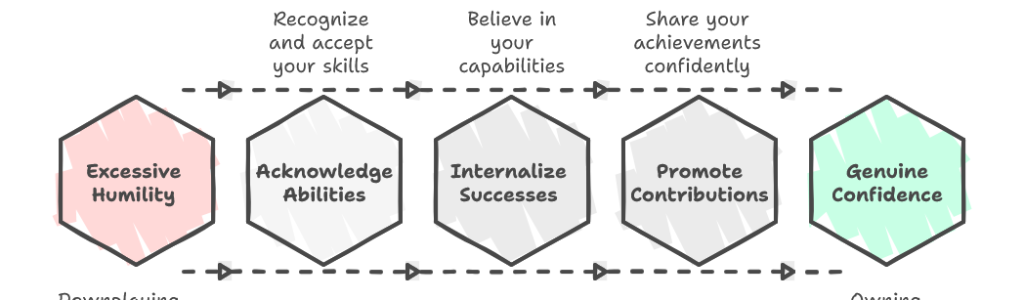
Imposter Syndrome vs. Incompetence: How to Tell the Difference
I’ll never forget the night I sat in my car after landing my biggest client ever, convinced they’d figure out I was a fraud by morning. My marketing agency had just beaten out three established firms for the contract, yet all I could think was, “They made a mistake choosing me.” Sound familiar?
If you’ve ever questioned whether you’re actually bad at your job or just feeling like you are, you’re not alone. The line between imposter syndrome and genuine incompetence can feel impossibly blurry when you’re in the thick of self-doubt. But here’s what I’ve learned after years of coaching entrepreneurs through this exact struggle: there’s a massive difference between the two, and recognizing it changes everything.
Whether you’re struggling with imposter syndrome or worried you might actually be incompetent, this guide will help you figure out what’s really going on. More importantly, you’ll walk away with practical strategies to move forward—because standing still in self-doubt isn’t an option when you’ve got a business to run.
Summary
This comprehensive guide breaks down the critical differences between imposter syndrome and actual incompetence, helping you understand which one you’re really dealing with. You’ll discover why even highly competent professionals feel like frauds, learn how to objectively assess your abilities, and gain practical strategies for building confidence while addressing any real skill gaps. By the end, you’ll have the tools to distinguish between unfounded self-doubt and areas where you genuinely need improvement, plus actionable steps to move forward regardless of which challenge you face.
Key Takeaways
Imposter syndrome affects competent people who doubt their abilities, while genuine incompetence involves actual skill gaps that affect performance
70% of professionals experience impostor syndrome at some point, including CEOs, doctors, and industry leaders
Objective assessment through feedback, performance metrics, and peer comparison reveals the truth about your competence
Perfectionism often triggers both imposter feelings and performance issues, but addressing it differently matters
Building a growth mindset allows you to combat imposter syndrome while simultaneously improving real weaknesses
What Is Imposter Syndrome, and Why Do So Many People Experience It?

Let me paint you a picture: You’ve just nailed a presentation, your supervisor is praising your work, and a coworker even asks for your advice. Yet inside, you’re thinking, “If they only knew I Googled half of this last night.” That’s imposter syndrome in action—the persistent feeling that you’re “faking it” despite clear evidence of your competence.
This psychological pattern affects an estimated 70% of people at some point in their careers. It’s that nagging voice saying you don’t deserve your success, that you’ve somehow fooled everyone into thinking you’re capable. The roots often trace back to family dynamics, societal pressures, or that first job where you felt completely out of your depth. For many of us who didn’t follow traditional paths—like earning degrees through experience rather than formal education—these feelings intensify. We constantly feel we need to prove ourselves worthy of our positions.
How Does Genuine Incompetence Differ from Imposter Syndrome?
Here’s where things get interesting. Genuine incompetence and imposter syndrome might feel similar from the inside, but they’re fundamentally different beasts. Let me break this down in a way that finally clicked for me:
Signs of Imposter Syndrome:
You receive positive feedback, but dismiss it as “them being nice”
Your work meets or exceeds standards, yet you feel it’s never good enough
You’ve been promoted or given more responsibility (people don’t promote incompetent employees)
You can point to specific achievements, but explain them away as luck
Others seek your expertise, but you think you’re fooling them
Signs of Genuine Incompetence:
You consistently miss deadlines despite your best efforts
Negative feedback points to the same issues repeatedly
You struggle with basic tasks that others at your level handle easily
Your work requires constant correction or revision by others
You can’t complete projects without significant external help
The key difference? Evidence. Imposter syndrome ignores positive evidence, while incompetence at work leaves a trail of actual performance issues.
What Are the Psychological Triggers Behind Your Self-Doubt?
Self-doubt doesn’t just appear out of nowhere—it’s triggered by specific situations and thought patterns. In my case, every time I pitched to a Fortune 500 company, my brain would scream, “You don’t belong here!” These triggers often stem from moments when we feel exposed or vulnerable.
Common triggers include starting a new role, being the only one “like you” in the room (whether that’s age, background, or experience level), or receiving a big opportunity. For entrepreneurs, it might be that first major client or speaking engagement. Your brain interprets these situations as threats, activating that primitive fear of being cast out from the tribe. Past experiences amplify this—maybe you were criticized heavily as a kid, or perhaps you entered a male-dominated field where you constantly felt you had to prove yourself twice as hard. Understanding your specific triggers helps you prepare for and navigate these moments of intense self-doubt.
Why Do High Achievers Often Feel Like Frauds at Work?
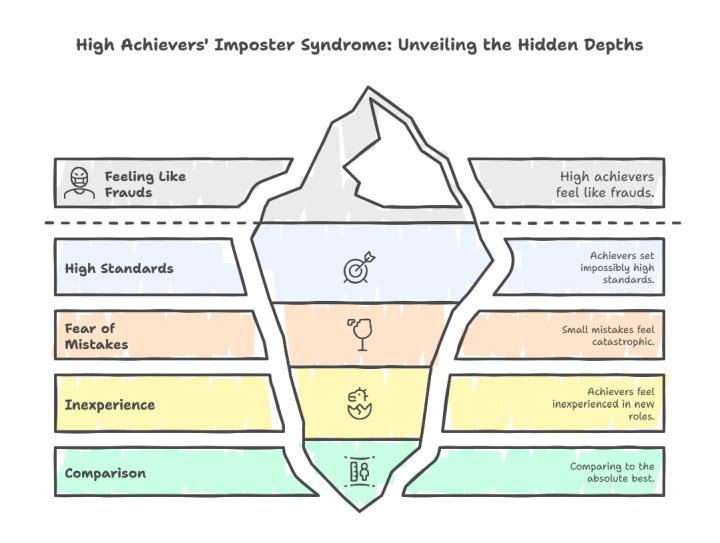
Here’s the paradox that used to keep me up at night: the more I achieved, the worse my imposter syndrome became. High achievers are actually more susceptible to feeling like frauds because we set impossibly high standards for ourselves. We’re not comparing ourselves to average—we’re comparing ourselves to the absolute best in our field.
Think about it. When you’re good at what you do, people expect excellence. One small mistake feels catastrophic because it threatens the image others have of you (and that you’re desperately trying to maintain). Plus, high achievers often move into positions where they’re suddenly the least experienced person in the room again. That senior director role you earned? Now you’re surrounded by other senior directors who seem to have it all figured out. The truth is, they’re probably fighting the same feelings. Success doesn’t cure imposter syndrome—it often amplifies it.
[Wondering If These Signs Apply to You? Take Our Comprehensive Quiz →]
How Can You Objectively Assess Your True Competence Level?
When you’re caught in self-doubt, objective assessment becomes your lifeline. I learned to stop trusting my feelings and start looking at facts. First, gather concrete evidence: pull up your performance reviews, list your completed projects, count your successful outcomes. Don’t just remember them—write them down. Our brains conveniently forget successes while highlighting every tiny failure.
Next, benchmark yourself against industry standards, not against your imagination of perfection. What are the actual requirements for someone in your position? Are you meeting them? Exceeding them? Ask your supervisor or coach for specific feedback about where you stand compared to others at your level. One exercise that changed everything for me: I asked three colleagues to list my top five strengths. Their answers shocked me—they saw competence where I saw inadequacy. This external perspective cuts through the noise of self-doubt and shows you what’s really there.
Imposter Syndrome vs Real Lack of Skill: What Are the Key Signs?
Let’s get crystal clear on the differences with a comparison that’ll help you identify which one you’re dealing with:
Aspect | Imposter Syndrome | Genuine Incompetence |
|---|---|---|
Performance | Meets/exceeds expectations | Consistently falls short |
Feedback | Positive but dismissed | Negative and consistent |
Learning Curve | Quick to grasp concepts | Struggles with basics |
Peer Comparison | Similar or better outcomes | Noticeably behind peers |
Problem Pattern | Fear despite success | Failure despite effort |
Others’ Perception | Seen as competent | Concerns raised by others |
The pattern becomes obvious when you look objectively. People with imposter syndrome have a perception problem—they feel incompetent despite evidence of competence. Those with genuine skill gaps have a performance problem—they struggle to meet basic requirements despite trying.
Do Successful People Really Experience Imposter Syndrome?
Absolutely. In fact, some of the most successful people are the ones who struggle most with feeling like frauds. Maya Angelou, after writing eleven books and winning countless awards, said, “I have written eleven books, but each time I think, ‘Uh oh, they’re going to find out now.'” Think about that—one of the most celebrated authors of our time, convinced she was about to be exposed.
Tom Hanks, Sheryl Sandberg, Howard Schultz—they’ve all spoken openly about their imposter feelings. The higher you climb, the more visible you become, and the more you fear that everyone’s watching for you to slip up. Success doesn’t inoculate you against imposter syndrome; it often intensifies it. Why? Because with success comes higher stakes. More people are watching, more is expected, and that little voice saying “you don’t deserve this” gets louder. The difference is that successful people have learned to act despite the doubt, not wait for it to disappear.
How Can Perfectionism Fuel Both Self-Doubt and Feelings of Incompetence?

Perfectionism is imposter syndrome’s best friend and worst enabler. I used to spend hours perfecting proposals that were already excellent, convinced that one typo would expose me as incompetent. Here’s the trap: perfectionism sets an impossible standard, guarantees you’ll fall short, and then uses that “failure” as evidence that you’re a fraud.
The perfectionist mindset creates a vicious cycle. You believe you must be flawless to be considered competent, so every mistake becomes catastrophic evidence of your inadequacy. You overwork to compensate, burning yourself out while never feeling good enough. Meanwhile, you’re so focused on avoiding mistakes that you miss opportunities for growth and learning. The ironic part? Perfectionism actually hinders competence by preventing you from taking risks, trying new approaches, or learning from failures. Breaking free means accepting that competence doesn’t require perfection—it requires showing up, doing solid work, and continuously improving.
[Identify Your Perfectionist Patterns – Take Our Tailored Assessment →]
Does Experience Actually Help You Overcome Imposter Syndrome?
You’d think experience would cure imposter syndrome, right? After ten years in marketing and five running my own agency, I can tell you it’s more complicated than that. Experience helps, but not in the way you’d expect. It doesn’t eliminate self-doubt—instead, it gives you evidence to argue against it.
With experience comes a track record you can’t easily dismiss. When that voice says “you’re incompetent,” you can point to specific times you’ve handled similar challenges successfully. You develop what I call a “confidence library”—a mental catalog of problems you’ve solved and obstacles you’ve overcome. But here’s the thing: experience also brings new challenges and higher expectations. Each level up introduces fresh opportunities to feel out of your depth. The difference is that experience teaches you something crucial: feeling incompetent and being incompetent aren’t the same thing. You learn to act despite the doubt, knowing you’ve felt this way before and still succeeded.
How Can Constructive Feedback Help You Navigate Self-Doubt?
Feedback is your reality check when self-doubt clouds your judgment. But here’s what I learned the hard way: you have to actually ask for it, and you have to be specific. Vague requests like “How am I doing?” get vague responses. Instead, try: “What are three things I do well, and what’s one area where I could improve?”
The key is finding the right people to ask—those who’ll be honest but constructive. Your therapist or coach can help you process feedback objectively, especially when your brain wants to fixate only on the negative. Here’s my feedback framework:
The CLEAR Method:
Collect feedback from multiple sources
Look for patterns (not one-off comments)
Evaluate against objective standards
Accept both strengths and growth areas
Respond with concrete action steps
Remember, genuinely incompetent people rarely seek feedback—they often don’t realize there’s a problem. The fact that you’re asking shows self-awareness, a key component of competence.
Are You Underestimating Yourself? Time to Recognize Your Achievements
We’re terrible at recognizing our own achievements. Our brains literally rewrite history, minimizing our successes while amplifying our failures. I once had a client list their accomplishments, and they wrote three lines. When I listed what I’d observed in just six months of working together, it filled two pages. This isn’t humility—it’s distortion.
Start an achievement journal today. Every Friday, write down three things you accomplished that week, no matter how small they seem. Include positive feedback you received, problems you solved, and progress you made. When imposter syndrome hits, you’ll have concrete evidence of your competence. Don’t just list what you did—note the skills each achievement required. That project you completed? It required project management, communication, problem-solving, and expertise in your field. You’re not “just lucky”—you’re skilled. The more you practice recognizing your achievements, the harder it becomes for imposter syndrome to convince you otherwise.
What Thought Patterns Create That “Not Good Enough” Feeling?
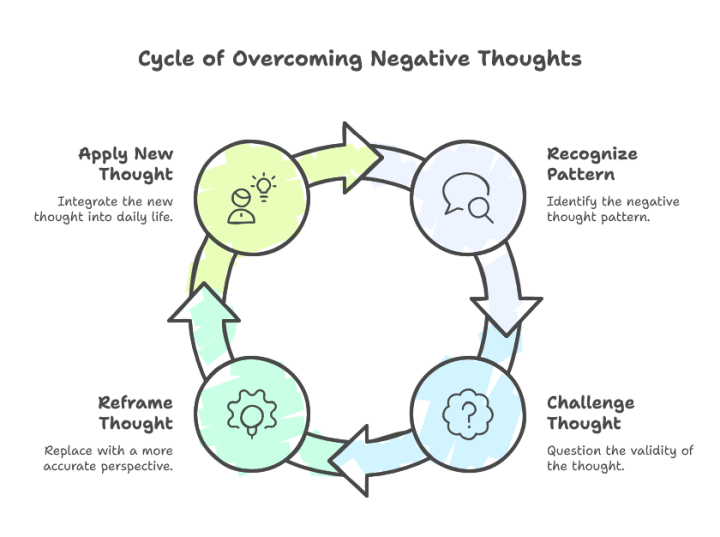
That “not good enough” feeling doesn’t come from nowhere—it’s created by specific thought patterns I see constantly in my clients. The all-or-nothing thinking that says you’re either perfect or you’re a failure. The mental filtering that ignores five compliments but obsesses over one piece of criticism. The comparison trap, where you compare your inside struggles to everyone else’s outside success.
These patterns become so automatic that we don’t even notice them. You make one mistake and think, “I always mess up.” Someone else gets promoted and you think, “I’ll never be good enough.” But here’s what changes everything: these thoughts aren’t facts. They’re just thoughts, and thoughts can be changed. Start by catching yourself in these patterns. When you think “I don’t deserve this success,” ask yourself: “Would I say this to a friend in my position?” The answer is always no. We need to reframe these thoughts, not to be falsely positive, but to be accurate. Replace “I’m a fraud” with “I’m learning and growing.” Replace “I don’t belong here” with “I earned my place here.”
[Get Personalized Strategies Based on Your Thought Patterns – Take Our Quiz →]
Can You Combat Imposter Syndrome While Building Competence?
Here’s something that took me years to figure out: you don’t have to wait until you feel confident to take action. You can combat imposter syndrome while actively building your skills. In fact, they work better together than separately. Every time you learn something new, you’re both increasing your competence and proving to yourself that you’re capable of growth.
The key is to work towards realistic goals that stretch you without overwhelming you. When I wanted to improve my public speaking, I didn’t immediately book a keynote. I started with small workshops, gradually building both skill and confidence. This approach—what psychologist Carol Dweck calls adopting a growth mindset—acknowledges that abilities can be developed. You’re not incompetent; you’re just not competent in that specific area yet. That word “yet” changes everything. It transforms “I can’t do this” into “I’m learning to do this.” Focus on progress, not perfection, and celebrate the journey of learning rather than waiting to feel “ready.”
Building Confidence Through a Growth Mindset: What Strategies Work?
A growth mindset has been my secret weapon against both imposter syndrome and actual skill gaps. It’s not about empty affirmations—it’s about fundamentally changing how you view challenges and setbacks. When you have a fixed mindset, every mistake feels like proof you’re not good enough. With a growth mindset, mistakes become data points for improvement.
Here are strategies that actually work:
Redefine failure as learning: Every setback teaches you something valuable
Focus on effort over outcome: Celebrate the work you put in, not just results
Use “not yet” language: “I don’t know how to do this yet” instead of “I can’t”
Seek challenges deliberately: Comfort zones are where growth goes to die
Track progress, not perfection: Compare yourself to who you were last month, not to others
Find learning partners: Surround yourself with others committed to growth
Celebrate small wins: Acknowledge every step forward, no matter how small
This mindset shift helped me transition from avoiding opportunities (afraid they’d expose me) to seeking them out (knowing they’d help me evolve). An executive coach once told me: “Confidence isn’t about knowing everything—it’s about knowing you can figure things out.”
Ready to Know for Sure? Where to Take an Imposter Syndrome Test
If you’re still unsure whether you’re dealing with imposter syndrome or genuine incompetence, it’s time to get clarity. An imposter syndrome test can help you understand the patterns behind your self-doubt and provide personalized insights for your situation. These assessments examine your thought patterns, behaviors, and responses to success and failure, giving you an objective view of what’s really happening.
The assessment looks at how you internalize achievements, respond to feedback, and view your competence compared to others. It identifies which type of imposter syndrome affects you most—whether you’re a perfectionist, an expert, a soloist, a natural genius, or a superwoman/superman. More importantly, it distinguishes between healthy self-reflection and destructive self-doubt. Once you understand your specific patterns, you can develop targeted strategies to combat them. Remember, knowing is the first step to changing, and change is what empowers you to build the career and life you deserve.
[Take Our Free Imposter Syndrome Test to Find Out If You’re Affected →]
Conclusion
Here’s what I want you to remember: that feeling of being a fraud? It doesn’t mean you are one. After years of coaching entrepreneurs and battling my own imposter syndrome, I’ve learned that the most competent people often doubt themselves the most. The incompetent ones? They rarely question their abilities.
If you’ve made it this far, you’re likely dealing with imposter syndrome, not incompetence. Why? Because genuinely incompetent people don’t spend time reading articles about how to improve. They don’t seek feedback, question their abilities, or worry about letting others down. The very fact that you care about your competence is evidence of it.
Moving forward doesn’t require eliminating self-doubt—it requires taking action despite it. Start with one small step today. Review your achievements, seek specific feedback, or take that assessment to understand your patterns better. Remember, you don’t overcome imposter syndrome once and for all. You learn to combat it, day by day, achievement by achievement. And that’s not just okay—it’s exactly how it’s supposed to work.
Your doubt doesn’t disqualify you from success. In fact, it might just be the proof that you’re exactly where you’re supposed to be, doing exactly what you’re capable of—even if your brain hasn’t caught up yet.
Frequently Asked Questions
Q: Can someone have both imposter syndrome and areas where they’re not good enough at their job?
A: Absolutely. Most capable people have both—areas where they’re highly competent but feel inadequate, and other areas where they genuinely need skill development. The key is accurately identifying which is which. Someone might be an excellent strategist who feels like they’re “faking it” (imposter syndrome) while genuinely struggling with technical skills that get in the way of their performance. The danger comes when negative thoughts make you think you underperform at everything, or when you dismiss real skill gaps as “just insecurity.”
Q: How long does learning and growth take when dealing with imposter syndrome?
A: I need to outline the reality—you don’t achieve complete mastery over imposter syndrome like you’d master a skill. It’s more like an ongoing journey. To improve, people who experience this struggle need consistent practice with the right strategies. Within a few weeks, you can start recognizing the patterns. Within months, many feel a significant improvement in their self-esteem. But even years later, it might still surface during big moments. The difference is you’ll know how to handle it without letting it affect your career advancement.
Q: Should I seek counseling or consultation for my imposter syndrome?
A: This depends on how much trouble it’s causing in your life. If you feel like you’re constantly inadequate and it’s affecting your work performance, counseling can be incredibly helpful. A therapist can help you understand why you feel like you’re not performing well and address the root causes. For business-specific challenges, a consultation with a coach who specializes in imposter syndrome might be more targeted. Many people find that combining both provides the comprehensive support they need—therapy for the deeper emotional work and coaching for practical strategies.
Q: What if I discover I actually do perform as poorly as you think?
A: First, if you’re worried about this, you’re probably not as inadequate as you believe. But if you do identify genuine areas where you’re not good enough at your job, that’s actually valuable information. You can’t improve what you don’t acknowledge. Create a specific plan for learning and growth, find external sources of training or mentorship, and track your progress toward mastery. Remember, everyone starts somewhere. The difference between someone who remains inadequate and someone who becomes competent is simply the commitment to improvement.
Q: How can I tell if my self-doubt is getting in the way of career advancement?
A: Look for concrete patterns. Are you turning down opportunities because you feel like you’re “faking it”? Do employees feel you’re competent while you’re convinced you’re a “fraud”? Are you avoiding applying for promotions despite positive feedback? If your insecurity causes you to underperform in interviews, avoid visibility, or decline stretch assignments, it’s definitely affecting your career. The key is recognizing that these negative thoughts about being inadequate don’t reflect reality—they’re symptoms that need in order to be addressed through targeted strategies, whether through self-work, counseling, or professional consultation.
Q: Does low self-esteem always indicate imposter syndrome?
A: Not necessarily. Low self-esteem is broader and might stem from various sources, while imposter syndrome specifically relates to doubting your competence despite evidence of capability. Someone with general self-esteem issues might have trouble in multiple life areas, while people who experience imposter syndrome often function well but feel like they’re “faking” their success. However, the two often overlap. Capable people might have solid self-esteem in some areas while feeling inadequate professionally. If you’re having trouble distinguishing between them, a consultation with a mental health professional can help clarify what you’re experiencing and outline the best path forward for your learning and growth journey toward genuine mastery.